
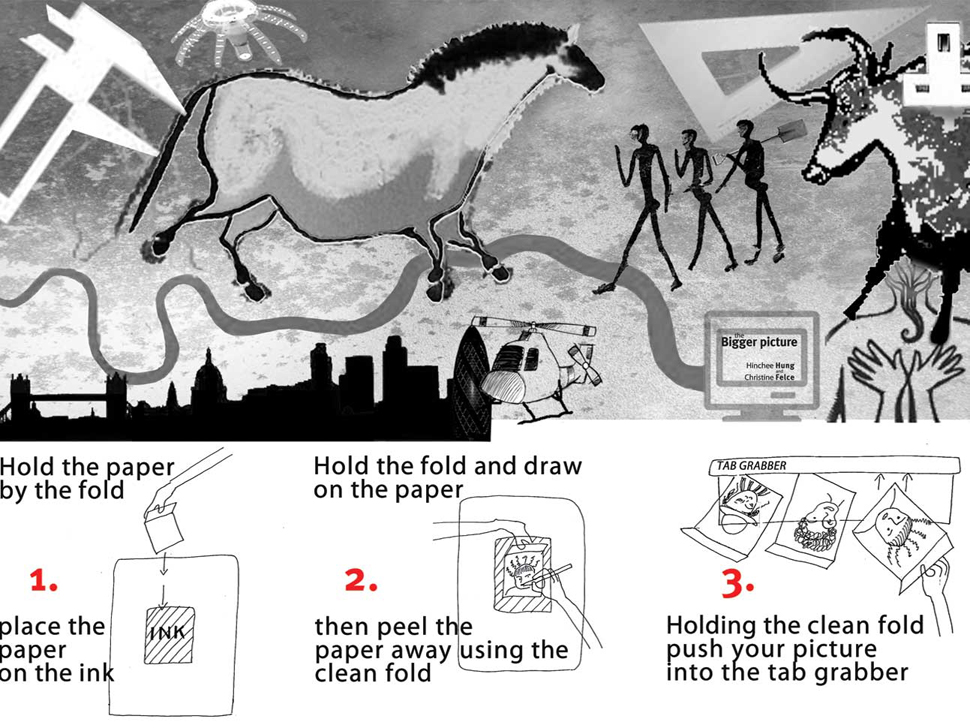
A participative art project in collaboration with print-maker Christine Felce 5 – 8 October 2011 ExCel London
Over 4 days while 125,000 visitors gathered to witness an event variously described as a “skills Olympics” the artists invited the public to draw the faces of their memorable teachers and write them a message. In drawing on an inked plate many had their first taste of mono printing
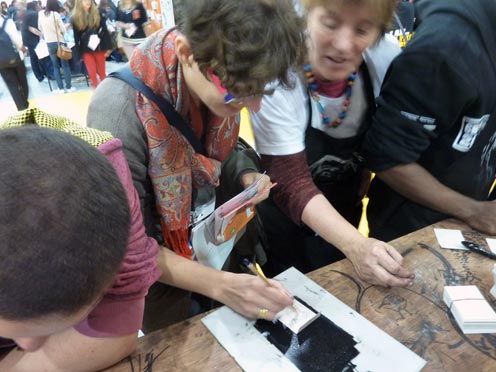
About 4000 people, young and old, stopped by to “Have a Go at public art”
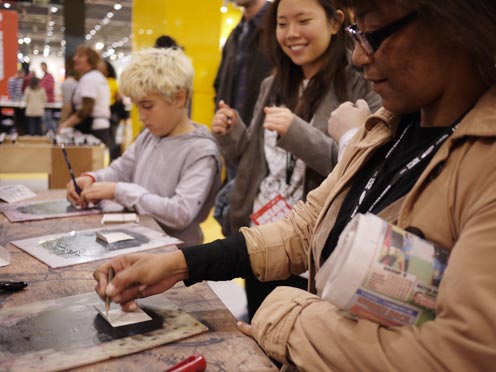
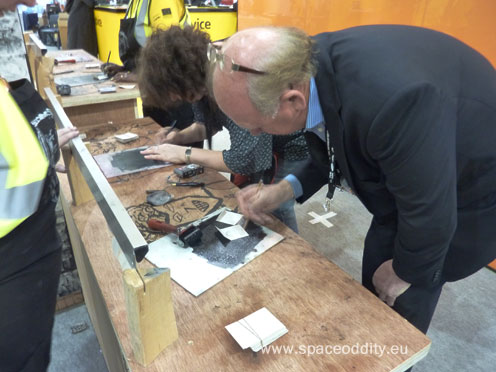
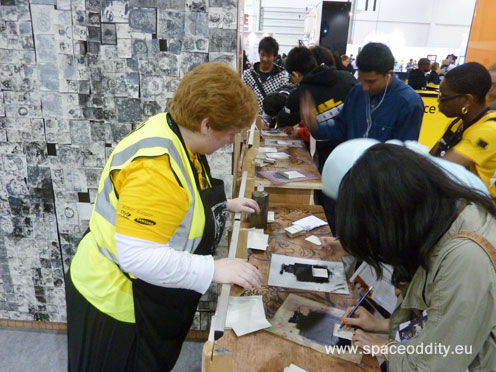
The project was sponsored by WorldSkills London 2011 who had the vision to give 2 mature artists free reign in devising and delivering a “Have a Go” event
It was not initially obvious to foreign delegates what place expressive mark-making and ‘art’ had in a vocational skills competition event. But their eyes soon lit up on realising that the Bigger picture was about remembering our teachers and all those who shared their skills over the years
Thousands of these mono print components went towards the building of a modern day cave-painting
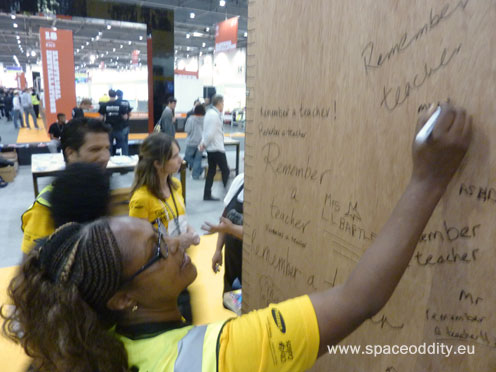
“Making a mark, leaving tweets, writing on walls, or stone tablets, these are all acts of remembrance. When a group of people all commit to the same act of remembrance something special happens” said Christine Felce. “We are asking all the contributors to ‘the Bigger picture’ to cast their minds back and acknowledge someone who inspired them then write that person’s name down and leave a message”
People’s relationships with their teachers or mentors are often messy and complex. This work invited all to evoke one such acknowledgement
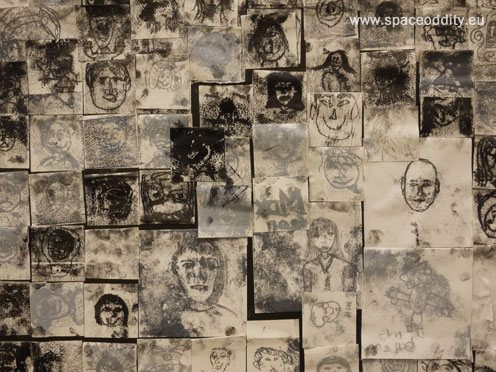
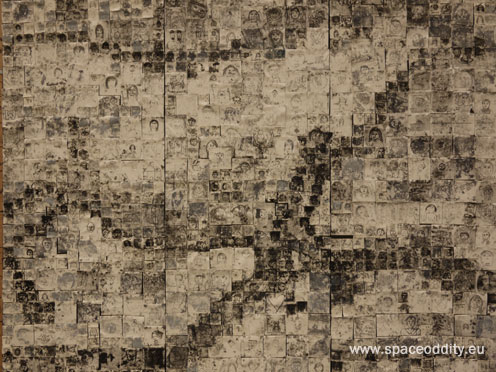
the Bigger picture was a 7 meter wall of memories where the spectators left their marks and created their own social engagement
In choosing the cave-painting device the artists tapped into atavistic tendencies to commemorate the gathering of spirited youth, celebrating their skills and ambition
Close to the canvas all you see are faces. But in life as in art, put distance between yourself and the minutia and you begin to see the bigger picture

Young visitors needed no encouragement to draw, or write, on the wall. The open invitation to draw arrows pointing towards the ‘message book’ very soon produced panels of graffiti which became artworks in themselves
In true competitive spirit many vied to draw their arrows as high up on the wall as they could reach, with or without a leg up from their mates


It became clear that young people relish the chance to ‘make their mark’ in this befuddling world, even if it is just to scribble their names and Blackberry messenger numbers on a plywood wall
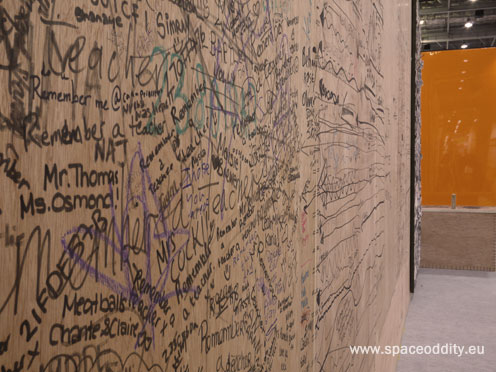
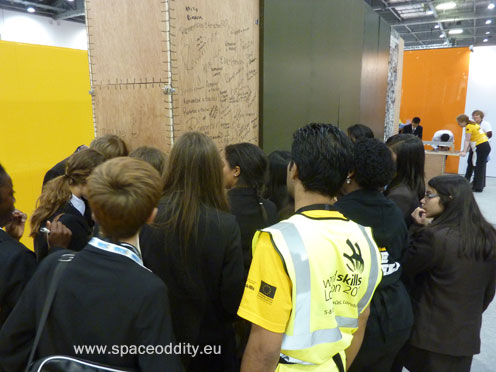
The bonus of offering an “allowing” as opposed to “controlling” environment for drawing was clear. The collective marks on the wall were indescribably beautiful and expressive

the Bigger picture was sculptor Hinchee Hung’s first encounter with Designer/builder Olly Bishop-Young. His team installed the 7m X 3m wall structure, and furthermore has comprehensively recycled the wood deployed, graffiti and all
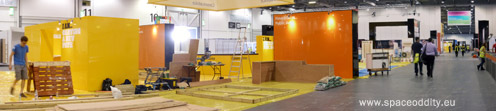
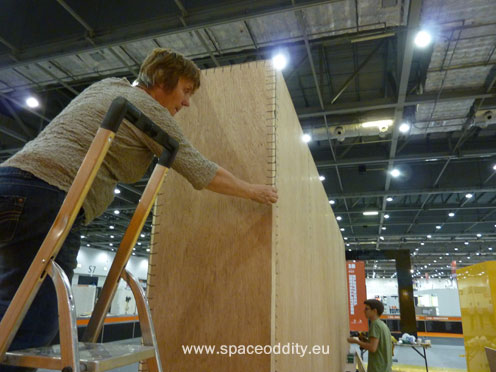
So who started all this drawing on the wall? Here is Christine Felce on build day, drawing blanket stitches on the ply board interfaces, the artists’ design for unifying the structure, giving the stand an aesthetic which distinguishes it from all its institutional neighbours

 Space Oddity
You must be logged in to post a comment.